A strong and inclusive society depends on three important pillars: women empowerment, environmental sustainability, and access to health and medical assistance. Child education These areas are closely connected with education, livelihood, community development, social equality, and the overall quality of life. NGOs working at the grassroots level play an important role in supporting vulnerable communities and creating opportunities for positive social change.
Women Empowerment for a Stronger Community
Women empowerment is essential for building an equal and progressive society. Millions of women, particularly those from economically weaker and rural communities, face challenges related to education, employment, financial independence, healthcare, and social security.
A Women Empowerment NGO in India can help address these challenges through education, vocational training, employment support, awareness programmes, and community-based initiatives. Providing women with practical skills allows them to become financially independent and contribute more effectively to their families and communities.
A Women Welfare NGO can also support women through awareness about women rights, gender equality, women safety, girl child education, and access to government welfare schemes. Skill development programmes such as tailoring, computer literacy, handicrafts, embroidery, beautician training, and entrepreneurship can create opportunities for sustainable livelihoods.
Supporting Women's Education and Employment
Education is one of the most powerful tools for women development. When girls receive quality education, they gain greater confidence and better opportunities for higher education and employment. Similarly, adult women can benefit from literacy programmes, digital education, vocational skills, and financial literacy.
Women skill development, self-help groups, micro-enterprise support, and entrepreneurship programmes can help women generate income. Supporting rural women, underprivileged women, and women from low-income households can contribute to greater financial independence and social inclusion.
Environment & Sustainability for Future Generations
Environmental protection is another important part of sustainable community development. Increasing pollution, climate change, deforestation, waste generation, water scarcity, and loss of biodiversity are creating serious challenges for communities around the world.
Environment and Sustainability programmes focus on protecting natural resources while encouraging communities to adopt responsible and environmentally friendly practices. NGOs can work with schools, communities, local authorities, and corporate partners to promote environmental awareness and practical conservation activities.
Tree Plantation and Environmental Conservation
Tree plantation is one of the simplest ways communities can contribute to environmental conservation. Trees help improve air quality, reduce heat, support biodiversity, prevent soil erosion, and create greener neighbourhoods.
Community-based plantation drives can involve students, young people, volunteers, residents, and corporate employees. Activities such as urban tree plantation, Miyawaki forests, social forestry, biodiversity conservation, and green belt development can contribute to healthier surroundings.
Environmental education is equally important. Schools and community groups can conduct awareness programmes about global warming, climate change, waste management, plastic pollution, water conservation, renewable energy, and sustainable living.
Waste Management and Sustainable Development
Responsible waste management can reduce pollution and protect public health. Communities can be encouraged to practise waste segregation, recycling, composting, and reduction of single-use plastics.
Sustainable development requires cooperation between individuals, communities, NGOs, businesses, and government agencies. Small changes in everyday behaviour, combined with organised environmental programmes, can create meaningful long-term impact.
Health & Medical Assistance for Vulnerable Communities
Access to healthcare is a basic requirement for a healthy and productive society. However, low-income families, elderly people, children, migrant workers, and other vulnerable communities may face difficulties in accessing timely and affordable medical services.
A Health and Medical Assistance NGO can help bridge this gap through health awareness programmes, medical camps, healthcare referrals, medicine support, diagnostic assistance, and community outreach.
Healthcare Support for Poor and Underprivileged Communities
Free or low-cost health check-up camps can help identify common health problems at an early stage. Medical camps may provide basic consultations, blood pressure checks, blood sugar testing, general health assessments, and health awareness.
An NGO for medical help can also connect disadvantaged patients with hospitals, doctors, diagnostic centres, and other healthcare resources. Assistance can be particularly valuable for families who struggle to manage medical expenses.
Healthcare programmes may focus on women's health, child healthcare, elderly care, preventive healthcare, cancer awareness, nutrition, hygiene, and community health education.
Cancer and Critical Medical Support
Serious illnesses such as cancer can place significant financial and emotional pressure on families. Medical assistance programmes can help eligible patients access information, treatment referrals, medicines, diagnostic services, and other forms of support.
Cancer awareness programmes can also encourage early detection, healthy lifestyles, regular medical check-ups, and awareness of available treatment resources.
Connecting Women, Environment and Healthcare
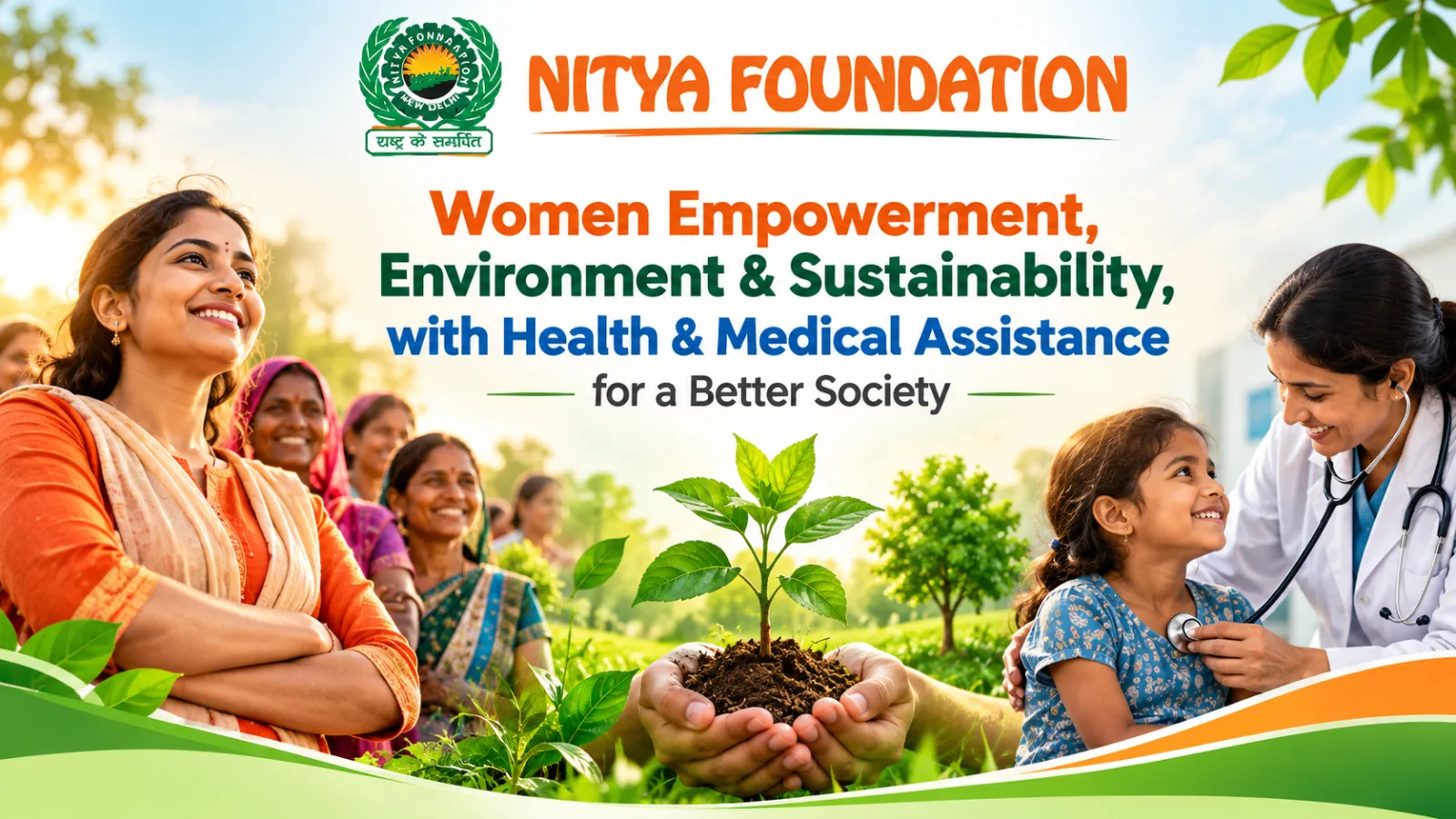
Women empowerment, environmental sustainability, and healthcare are not separate issues. They influence one another and can be addressed through integrated community development.
For example, women can be trained to participate in environment-friendly livelihoods, waste management, recycling, nursery development, and community plantation projects. Women-led self-help groups can contribute to local environmental initiatives while creating income opportunities.
Similarly, environmental conditions directly affect public health. Air pollution, contaminated water, poor sanitation, and unmanaged waste can increase health risks. Therefore, environmental protection is also an important part of preventive healthcare.
Health education can empower women and families to make better decisions about nutrition, hygiene, sanitation, maternal health, child care, and disease prevention.
The Role of NGOs in Social Development
NGOs can act as a bridge between communities and available social, educational, healthcare, and environmental resources. Through partnerships with schools, hospitals, government agencies, corporates, volunteers, and local communities, NGOs can implement programmes designed around real community needs.
A comprehensive social development approach can include women empowerment programmes, girl child education, skill development, healthcare assistance, medical camps, environmental conservation, tree plantation, waste management, elderly care, and community awareness.
The goal is not only to provide immediate assistance but also to create sustainable opportunities that help communities become more independent and resilient.
Building a Better and Sustainable Future
A better future requires collective action. Women empowerment can create financially independent and confident communities. Environment and sustainability initiatives can protect natural resources for future generations. Health and medical assistance can ensure that vulnerable people have better opportunities to live healthy and dignified lives.
By supporting these three areas together, NGOs and communities can contribute to inclusive growth, social equality, environmental protection, and improved quality of life.
Everyone can contribute—through volunteering, awareness, skill sharing, environmental activities, community participation, or responsible donations. When individuals, organisations, and communities work together, meaningful and sustainable social change becomes possible.